
Don’t stray from the long path
Looking back and forward

Some time ago I wrote about a famous line from Miyamoto Musashi’s 独行道 (Dokkōdō : The Way of Walking Alone).
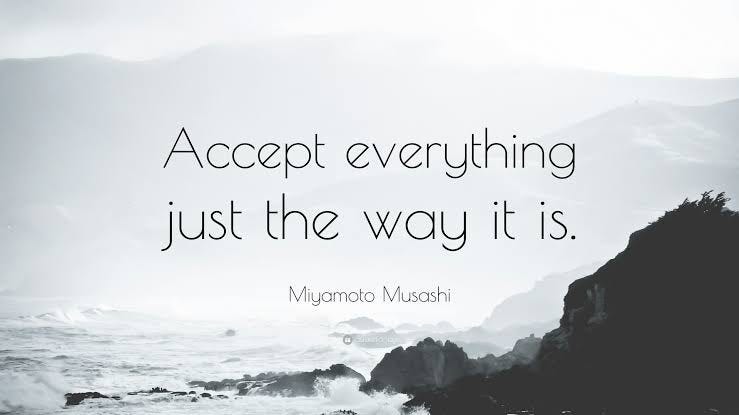
The Japanese version of this quote is 「ただこのままで、すべてを受け入れる」(tada no mama de, subete wo ukeireru) but this seems to be a simplified version of the original quote 「世々の道をそむく事なし」(Yoyo no michi o somuku koto nashi) which can be more or less looked at as “Don’t stray from the long path.”
The original archived article can be found here, but it is not essential reading. In today’s post I’d like to go into a bit more detail about this concept and how this principle is something that is very important to me.
The original context
When I wrote the original piece I was quite a new writer and I’d been churning out articles day after day. That was my seventh article on Substack, but I am now at the point where I’ve published over 170 on here. I’d like to think that I have matured somewhat as a writer and have settled into a more reasonable rhythm.
In August 2023 I had taken part in an iaidō tournament as a 3rd dan. I won one match and lost the next one. The main point of the article was to express that in iaidō there is no amount of extra effort you can put in on the day to make you better (you can’t brute force iaidō), and that accepting everything as it happened is the best way to deal with things in life. Accepting what happened and learning is the best result you can hope for. (Incidentally I took place in the same iaidō tournament yesterday as a 4th dan and lost the first match. The person who beat me went on to win the tournament. I can accept that result very easily).
But something I probably didn’t express as well as I would have like to is that to, “accept everything just the way it is,” is not an appeal for you to give up and stop striving. It’s just about approaching these things in a mature way.
To be pulled in different directions
To accept things just the way they are can sometimes be in opposition to other principles I try to follow. 不動心 (fudōshin: immovable mind/heart) is an ideal I have taken on board over my years of training, and it references having the resolve to stick to your principles, not buckle under pressure, and keep going no matter what.
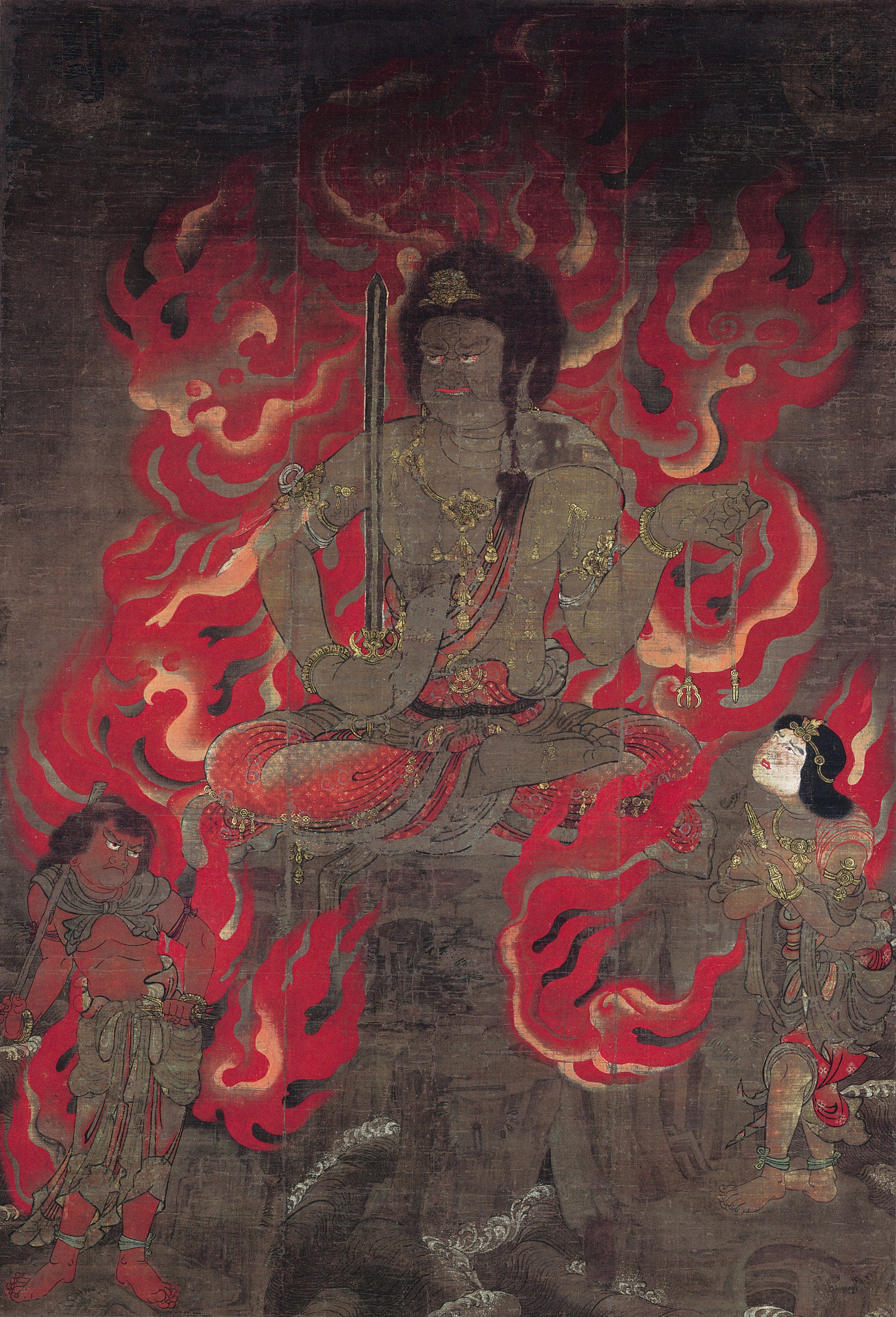
Fudōshin is expressed well in full contact martial artists who (in some circumstances) will stand there trading blows with each other and not reacting to the damage they have received. It’s not that uncommon for karate practitioners to get ribs broken during tournaments and only react to the damage once they are off the mat and the match is over.
This mindset is also pretty core for ultrarunning. Really long ultramarathons necessitate you running WAY beyond what most people would consider reasonable. You may feel like you are totally spent and that you cannot even take another step forward, but somehow you keep going. When I ran the Fuji 5 Lakes Ultramarathon in 2024 I thought my legs were going to give up on me at the 50K mark, but after that I still managed to run a further 68 km before finally letting myself drop to the floor.
I’ve been that fighter, and I’ve been that runner. I’ve powered through the point it was sensible to stop, and did not accept the sensible stopping point as a limit. But I still think that to accept things just the way they are is very important and needs to be used to balance fudōshin in order to prevent injury.
Don’t stray from the long path
The three major physical activities I do for personal growth right now are:
Running - For endurance and longevity
Karate - For strength and longevity
Iaidō - For mindfulness and longevity
Everything that I’m doing has longevity as one of the goals. And because longevity is one of the goals, I need to keep in mind that I cannot go too extreme on any of the activities I do. Doing full contact martial arts and running ultramarathons may be seen as going to the extreme end of what I can do, but generally I set myself safe parameters to operate under so I don’t end up with any permanent injuries. And that is the point that I anchor my unshakable resolve to.
Having the Goggins style willpower to slow down
I’m a big fan of David Goggins. His willpower to carry on when everything looks hopeless is truly an inspiration. But sometimes people read David Goggins incorrectly and will drive themselves to destruction even when it’s not necessary to do so.
While a lot of the highlights of Goggins’ career focus on his ultrarunning achievements (which he managed even on destroyed legs), people who actually read his work will note that these kinds of things are just highlights. I’ve read Can’t Hurt Me three times now and note that Goggins does have quite a few arcs where he accepts the situation he is in and reprioritizes.

After his heart surgery he was unable to run for quite some time. So he focused most of his time and energy on getting the world record for most pull-ups in 24 hours. Also, after finding his body was too full of tension from years of running, he met a physical therapist who taught him how to stretch, and now he spends hours a day focusing on stretching to make sure he is able to function at his best.
The “Goggins mindset” that people think of may be focused on the mind over matter, getting things done no matter what, there is a layer of accepting when you need to reprioritize and prepare so you can actually perform at your best. Going beyond 100% is something you do on race day (fudōshin), but part of preparing yourself to be able to hit that 100% is accepting your situation and dealing with things that need to be dealt with.
My recent “Goggins” problem
Last year I ran over 3,767.8 km. In 2026 I was also doing my best to keep up with that level of running, with my weekly totals being around 70km.
In Autumn last year I fell pretty hard on my right knee. Twice. I had some pain in that knee for a while but it largely went away. But in 2026, that pain returned and I decided that I’d go to the doctor, “If it got worse,” and, “When I have time.”
I ran the Hida Takayama Ultramarathon with that knee problem, but after the run it felt better than it had done in a while. But by July, I found I was just ignoring the pain in my leg again and decided to go to the doctor.
I had an X-ray (no broken bones), but an ultrasound on my leg revealed that I had 膝蓋靱帯炎 (shitsu gai jintai en), or Inflammation of the patellar ligament (also known as jumpers knee). My doctor told me that the tendon under my knee was very inflamed and would require surgery if it snapped.
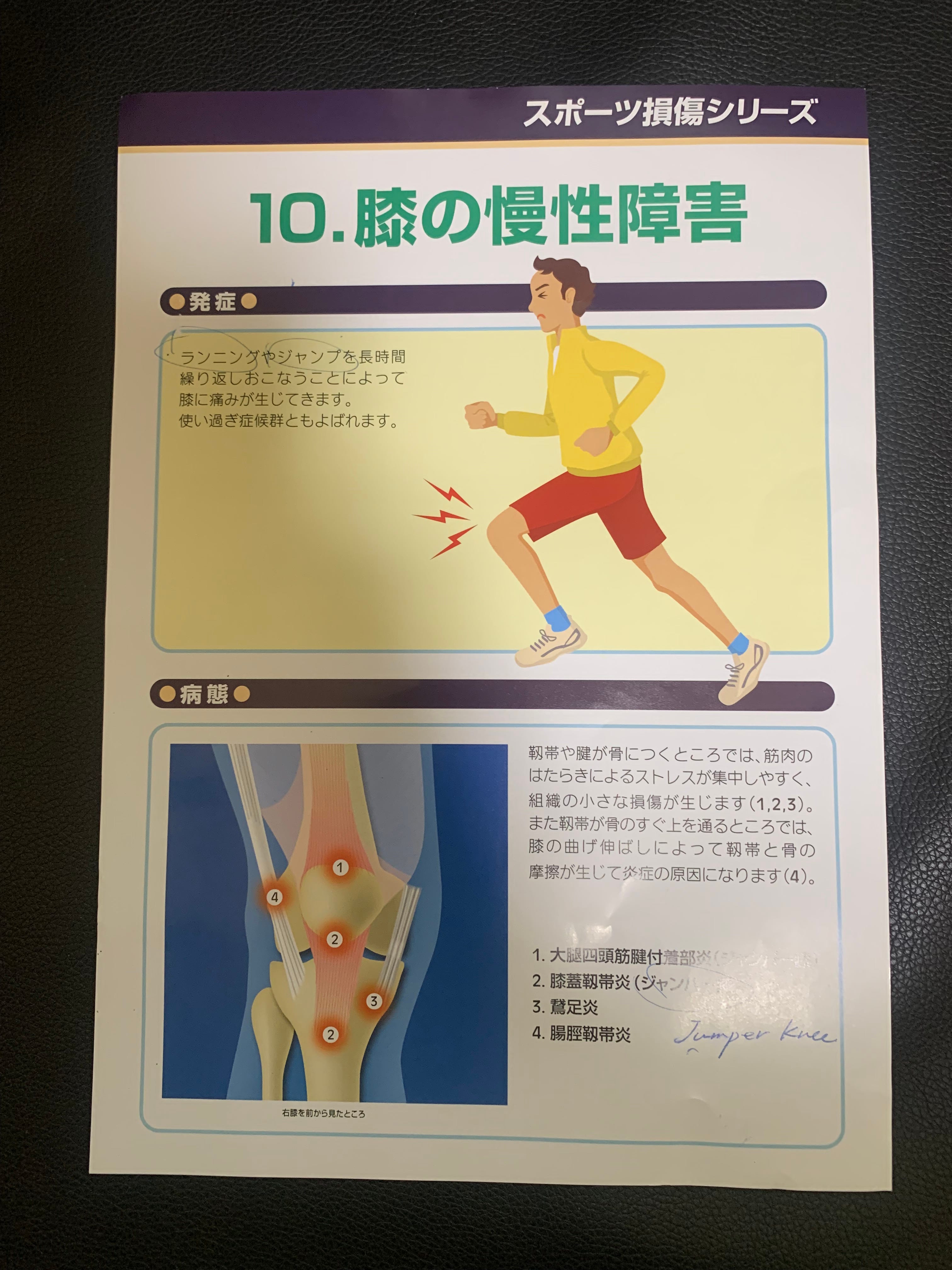
I was given anti-inflammatories and compresses, told to ease back on the training, and stretch every day. A consultation with a physiotherapist made me learn that the muscles in my quads were tight through overuse and lack of stretching, so that is something I need to work on.
The fudōshin mindset could have taken me in two different directions:
Keep grinding and deal with the pain. It will eventually get better.
Accept that I need to step back, refocus, heal, then come back stronger.
I chose to accept everything just the way it is, listen to my doctor, and recover properly, so I will be able to keep doing what I love to do in the future. I stopped long distance running immediately (replacing my runs with walks). I still run but the speed is much slower and the frequency is reduced to twice a week. I am also stretching every day and incorporating strength training into my workouts (like Goggins, my pullup bar is getting a lot of use).
I am not sitting back and passively “accepting” that there is nothing that can be done about my knee. I am actively accepting that my knee needs to recover, refocusing my training, and treating this whole situation as a focused recovery block where I might be able to come back stronger than ever.
This seems like a much more mature approach than just accepting that I am in pain, ignoring all advise, and keeping accumulating damage until I either get better or destroy myself in the process.
Life, once again, is about balance.
Final thoughts and take home messages
Musashi’s writing is timeless. What was true during his life time in the 15 to 1600’s is still true today. But translations and interpretations sometimes cloud our understanding of what was said.
Being able to look at different philosophies and see how they flow together might be the best way to approach things. While something may generally be true, it is important not to apply rigid thinking to it.
Even the modern philosopher, David Goggins can be misinterpreted. He may be an avatar of the concept of fudōshin, but even he has stepped back and refocused in order to reach greater heights instead of simply powering on to the point of total destruction.
The path is long and not necessarily a straight line.
「世々の道をそむく事なし」
“Don’t stray from the long path.”
- 宮本武蔵 (Miyamoto Musashi)
Thank you very much for reading. If you enjoy my work please share it with someone you think would also enjoy it.
If you aren’t subscribed, please sign up to keep up to date.
If social media is more your thing I’m active on Facebook, and Instagram.
And if you are feeling generous but don’t want to commit to a monthly subscription, you can send a small donation to my Buy me a coffee page below.
