
Gun Samurai: A Review
Read this book

As a foreign martial artist based in Japan I like getting in touch with other people who are cut from the same cloth. A while ago I got in touch with a British martial artist that practices a martial art that is a bit more long range than I’m used to.
Matt (Gun Samurai) is a member of the Matsumoto Castle Gun Corps and recently let me know about a book he wrote titled, Gun Samurai: A Decade in the Matsumoto Castle Gun Corps.
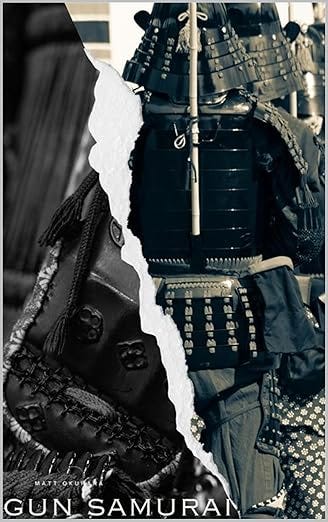
Matt has lived quite an interesting life. He was a soldier, a nuclear police officer, and is now an important member of the Matsumoto Castle Gun Corps.
The book itself acts as a biography for the man behind Gun Samurai, a history lesson on the history and practices related to Japanese gunnery, and a story about what it was like to go from an unknown foreigner to a cultural custodian.
As a martial artist myself, I have a lot of empathy with this story. During my time in Japan I have had a lot of very kind instructors who have taken me under their wing and taught me about martial arts. But the martial arts I practice are a little more well known and accessible than the one practiced by Matt.
砲術 (Hōjutsu) or “gunnery” requires the use of firearms, which are not exactly easy to get hold of in Japan. It requires a lot of dedication to get the licenses involved and foreigners being foreigners, may not be able to dedicate themselves to such an arduous process.
Without giving too much of the book away, Matt discusses the process by which he went from a temporary member that was mostly there to observe and translate, to a senior “samurai” gunner in the Matsumoto Castle Gun Corps.
A lot of people who have little to no experience with Japan describe Japanese culture as some mysterious entity that foreigners can never become a part of. But this is as ridiculous a notion as “Samurai never used guns because they thought they were dishonorable.”
If you want to be a real part of Japanese culture it takes a lot of time and dedication. But you most certainly get out what you put in.
Based on my experience with Japanese martial arts I have always felt that the system is very meritocratic no matter where you go. There might be the odd weirdo out there that will complain about a foreigner having a gun or a sword, but the vast majority of people will respect those who have put in the time and effort to learn the craft properly and preserve an art form that may die out if it is not kept alive.
I’d like to thank Matt for writing this book. I listened to the Audiobook version of this and managed to complete it in about 4 days during my morning runs. It was great to run with you. I need to go over to Matsumoto some day to witness one of the displays myself.
Thank you very much for reading. If you enjoy my work please share it with someone you think would also enjoy it.
If you aren’t subscribed, please sign up to keep up to date.
If social media is more your thing I’m active on Facebook, Twitter, and Instagram.
And if you are feeling generous but don’t want to commit to a monthly subscription, you can send a small donation to my Buy me a coffee page below.

Osu!
Thank you for the fascinating article. I wasn't aware of Matt, who is a member of the Matsumoto Castle Gun Corp. What a remarkable background he has.
Regarding what it means to be a "Samurai" or become "part of the Japanese culture," while lineage is certainly important, I believe the most crucial elements are one's devotion and contribution to the "Do" (the Way). History shows that foreigners have played a significant role in Japanese martial arts, and I feel that same spirit is being carried on today by people like Matt.